
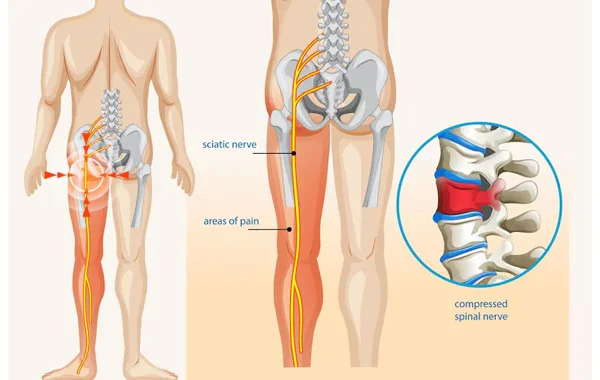
Sciatica is a condition that causes pain radiating from the lower back down to the leg due to compression or irritation of the sciatic nerve. It can affect mobility and daily life if not treated early.
Dr. Sneha Sharma offers advanced diagnosis and provides the best sciatica treatment in Gurugram, focusing on relieving nerve pressure, improving mobility, and preventing recurrence through personalized care.
Sciatica treatment focuses on reducing pressure on the sciatic nerve and addressing the underlying cause such as a slipped disc, spinal stenosis, or nerve inflammation.
Treatment includes non-surgical methods, targeted therapies, and minimally invasive procedures depending on the severity of symptoms.
Sciatica usually develops due to conditions affecting the lower spine, including:
Slipped or herniated disc
Spinal stenosis
Degenerative disc disease
Bone spurs in the spine
Injury or trauma to the lower back
Prolonged sitting and poor posture
Muscle tightness or nerve compression
Early treatment by Dr. Sneha Sharma can help prevent worsening of symptoms and long-term nerve damage.
The diagnosis of sciatica typically involves:
Detailed medical history review
Physical and neurological examination
Assessment of nerve pain and movement
MRI or imaging tests to identify nerve compression
Personalized treatment planning
This process helps determine the exact cause of sciatic nerve pain.
Dr. Sneha Sharma provides comprehensive sciatica treatment options including:
1. Conservative Treatment
Pain relief medications
Anti-inflammatory treatment
Physiotherapy and stretching exercises
Posture correction therapy
2. Advanced Non-Surgical Treatments
Nerve pain management therapy
Epidural steroid injections
Guided rehabilitation programs
3. Minimally Invasive Spine Procedures
In severe cases where nerve compression persists, minimally invasive surgery may be recommended to relieve pressure on the sciatic nerve.
4. Long-Term Prevention Plan
Patients receive guidance on spine strengthening, posture improvement, and lifestyle modifications to prevent recurrence.
1. What are the early symptoms of sciatica?
Common symptoms include lower back pain, pain radiating to the leg, numbness, tingling sensation, and weakness in the leg.
2. Is walking good for sciatica?
Yes, light walking and guided exercises can help improve blood circulation and reduce nerve pressure when done under medical advice.
3. Can sciatica go away on its own?
Mild cases may improve with rest and physiotherapy, but proper diagnosis and treatment are recommended to prevent recurrence.
4. How long does sciatica treatment take?
Most patients improve within a few weeks with proper treatment, while severe cases may require longer recovery.
5. When is surgery required for sciatica?
Surgery is recommended only when severe nerve compression causes persistent pain, weakness, or difficulty in movement despite non-surgical treatments.


.png)
Comments
Be the first to review